Message from the Head of Secretariat
At Delmi, we are constantly striving to remain relevant, to contribute evidence-based knowledge and to offer suggestions on how that knowledge can be put into practice. It is a lofty ambition to always succeed in this regard, but we do our best to go as far as we can.
For me, this means holding on to driving forces such as curiosity and openness to new perspectives, a willingness to learn and an ability to re-evaluate a perception when the knowledge suggests otherwise. I think a great deal about this in relation to our work of both producing knowledge and communicating that knowledge in a constructive way to the intended target groups. This requires not only that we are skilled at ‘packaging’ what we produce, but also that the recipient has a willingness and ability to receive what we deliver. Many social issues are complex – which is particularly true in the field of migration – and so it is hardly surprising that research does not provide simple, convenient answers or quick solutions. At the intersection of research, politics and practice, all stakeholders, in my view, need to become better at trying to understand and engage with each other’s different perspectives in order to make a genuine contribution to societal development. We hope to have the opportunity to discuss this and much more during Almedalen Week this year, which we write more about further down in this newsletter
Linked to the above reflections, we also need to acknowledge that research findings rarely appeal to everyone. Regardless, as producers of knowledge, we must maintain a consistent line and stand up for the knowledge we generate. Naturally, our research findings should be discussed and debated, but they must also be safeguarded, given the rigorous review processes we follow. Both my colleagues and I are regularly reminded of this, particularly at the academic seminars we organise within the research projects we are conducting.
| | |
Receiving feedback, obtaining suggestions for changes and improvements, and re-evaluating a thesis in light of the views of knowledgeable fellow researchers and practitioners, is crucial to ensuring the quality of what we deliver. In addition to ensuring that our work is scientifically sound, it is equally important that our policy recommendations – that is, how we propose that knowledge be translated into practical action – are useful. This is a crucial aspect of our work, and we are always open to developing it further.
During the spring, we have had a fruitful dialogue with the Ministry of Justice regarding Delmi’s extended mandate and new committee directives. We look forward to a government decision on new directives being taken shortly, so that we can plan how we will continue to contribute to the generation and dissemination of knowledge in the field of migration, also in the long term. In addition to everything we are already doing today, there are many new ideas within our secretariat and from external researchers that we hope to implement in the future. An exciting and eventful autumn lies ahead. Wishing you a wonderful and energising summer!
| Agneta Carlberger Kundoori,
Head of Secretariat
| | | | | Picture:
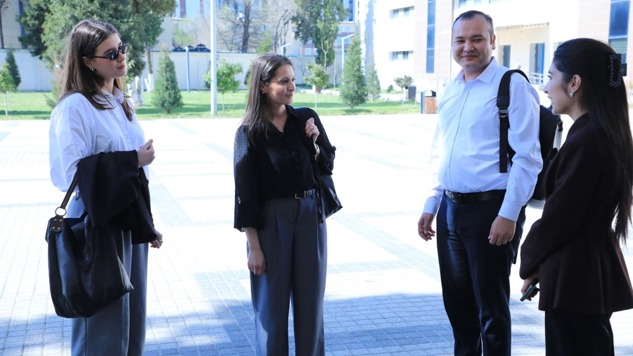
From the author groups meeting in Uzbekistan. Delmi in Uzbekistan: Latest news on the Legal Migration project
As part of Delmi’s AMIF-funded project From Information to Migration: Information Sharing in Third Countries and its Significance for Legal Migration to Sweden, the research team has now completed its third and final data collection trip. The project aims to strengthen knowledge of how legal migration to Sweden can be promoted through an analysis of opportunities and challenges linked to information dissemination in Iraq, Uzbekistan, and Pakistan.
The most recent trip was to Tashkent in Uzbekistan, where Pinar Aslan Akay and Jenny Bergsten conducted intensive fieldwork. Thus, the data collection phase of the project is now complete. During their stay in Tashkent, the research team held meetings with several key stakeholders relevant to the study, including the International Centre for Migration Policy Development (ICMPD), the International Organization for Migration (IOM), the Migration Research Centre (MRC), and representatives from Uzbekistan’s Ministry of Foreign Affairs, Ministry of the Interior, and Migration Service. These discussions have provided valuable insights into how information about legal migration pathways is produced, disseminated, and received, as well as the institutional and practical conditions that influence these processes. | "We received a warm welcome in Uzbekistan and are very pleased with the data we collected. Intensive efforts are underway to improve the dissemination of information about legal migration routes, and we met many stakeholders who were both committed to and driving these issues." Jenny Bergsten, research Coordinator and co-author of the report. | | | |
During the spring, all empirical data has been compiled and analyzed. A first draft of the report is now completed and will then be reviewed at an academic seminar and reference group meeting. The final report is scheduled to be presented in late 2026. Keep an eye on the tab Legal Migration, for more information and regular updates. | Policy brief 2026:4 The child rights perspective in the EU’s Migration and Asylum Pact
The EU’s new Migration and Asylum Pact aim to create a more effective and sustainable migration system, with a clearer division of responsibilities between Member States and common rules for asylum procedures and border controls.
This policy brief examines the extent to which a child rights perspective characterises the Pact. The analysis is based on the Convention on the Rights of the Child and the EU’s rights framework, where principles such as the best interests of the child, non-discrimination and the right of the child to be heard are central. The policy brief also highlights the measures proposed to implement the Pact in Sweden. The policy brief’s author is Rebecca Thorburn Stern, a professor of international law at Uppsala university.
| | | | Policy brief 2026:5 Implementing the Pact on Migration and Asylum: Efficiency, Responsibility and The Future of Protection in the EU
The EU Migration and Asylum Pact, adopted in May 2024 and due to be fully implemented in June 2026, represents the most comprehensive reform of the Common European Asylum System in over a decade. This policy brief analyses how the implementation of the Pact may affect access to protection within the EU. Despite progress in Member States’ preparations, recent reports indicate that significant challenges remain, including in terms of reception capacity, infrastructure and coordination. The policy brief argues that implementation risks reinforcing a border-centred migration system, where a focus on efficiency and control may come at the expense of rights and legal certainty. Particular attention is drawn to the expansion of border procedures, increased possibilities for detention, and the increased use of external partnerships and so-called safe third countries.
| | | | Policy brief 2026:6 Assessment of asylum claims by applicants who invoke sexual orientation and gender identity/expression as grounds for asylum
This policy brief summarizes three studies by Thomas Wimark (2025) on the asylum determination of individuals who invoke sexual orientation and gender identity as grounds for asylum. The studies are based on 3,588 randomly selected asylum decisions from the Swedish Migration Agency (2020) and combine descriptive statistics with logistic regression models to examine how the likelihood of being granted asylum varies across different grounds for asylum and which factors influence recognition rates. The findings show, among other things, that the current model for assessing HBTQI cases at the Swedish Migration Agency places considerable weight on narrative detail and emotional authenticity, which raises rule of law concerns and may create incentives for applicants to adapt to prevailing assessment criteria.
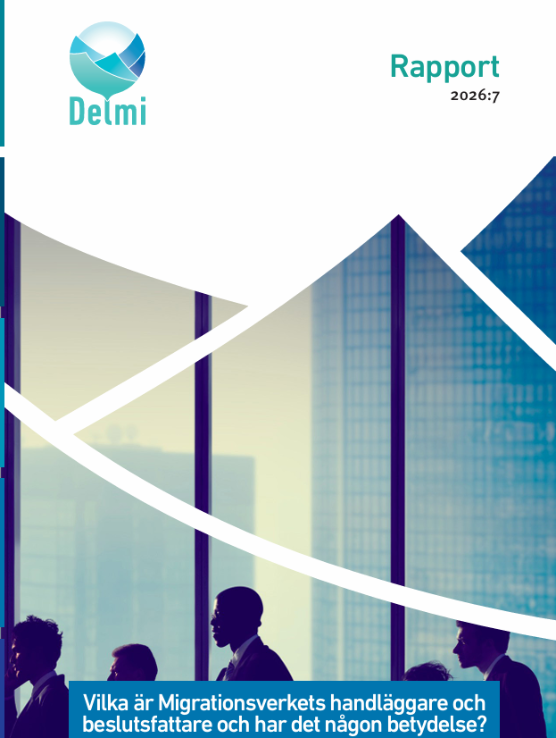
| | | | Report 2026:7 Who are the Swedish Migration Agency’s case officers and decision-makers, and does it matter?
This report examines who the Swedish Migration Agency’s case officers and decision-makers actually are, what decisions they make, and to what extent their socioeconomic and demographic profiles covary with those decisions. It provides a detailed description of these characteristics and focuses on how gender, experience, place of birth, and whether they have a legal education are associated with grant rates and processing times for asylum applications. The report is based on detailed data from the Swedish Migration Agency and Statistics Sweden covering the period 2020–2023. The analysis includes 814 case officers and decision-makers and 55,312 first-time applications. The report shows, among other things, that there are no statistically significant differences in approval rates linked to the gender or background of case officers or decision-makers. Processing times vary somewhat depending on the case officer’s experience and country of birth rather than the content of the case, but the differences are small and often explicable. The report also finds no systematic effect of case officers’ gender, education, experience, or country of birth on the likelihood of granting asylum.
| | The authors of the report are Henrik Andersson, Associate Professor of Economics, Institute for Housing and Urban Research (IBF), Uppsala University; Kristoffer Jutvik, PhD in Political Science, Department of Culture and Society, Linköping University; and Linna Martén, Associate Professor of Economics, the Swedish Institute for Social Research, Stockholm University.
*The policy brief is only available in Swedish.
Download the report here:
Who are the Swedish Migration Agency’s case officers and decision-makers, and does it matter? - Delmi. | | | | Picture: Dorian Labbe via Unsplash. | Voluntary Returns to Syria: Mapping Return Aspirations and Motivations of Syrians Living in Sweden/the EU
A new study that will be published this week: What do we actually know about the return aspirations and motivations of Syrians living in Sweden and the broader European Union? The fall of Bashar al-Assad’s regime in December 2024 and the end of the over 13-year Syrian civil war is said to have marked a pivotal moment for Syrians displaced in the European Union (EU), with many hoping to return and rebuild their country of origin as a result. In 2025, and in response to the end of the Syrian civil war, the Swedish government tasked the Swedish Migration Agency with mapping the need for measures in preparation for a possible increase in returns to Syria. Syria, however, continues to find itself in a state of profound political uncertainty. It’s fragile transition phase has the potential to shape the country’s future, and therefore the return aspirations and motivations of displaced Syrians living in the EU.
This policy brief seeks to better understand the return motivations of Syrians in Sweden and the EU, emphasizing the need for evidence-based policies that account for the complexities of voluntarily returning to a country that remains in a state of political uncertainty and fragile transition phase. It asks the primary question: what are the current return aspirations and motivations of Syrians living in Sweden/the EU?
Read more here: Voluntary Returns to Syria: Mapping Return Aspirations and Motivations of Syrians Living in Sweden/the EU - Delmi
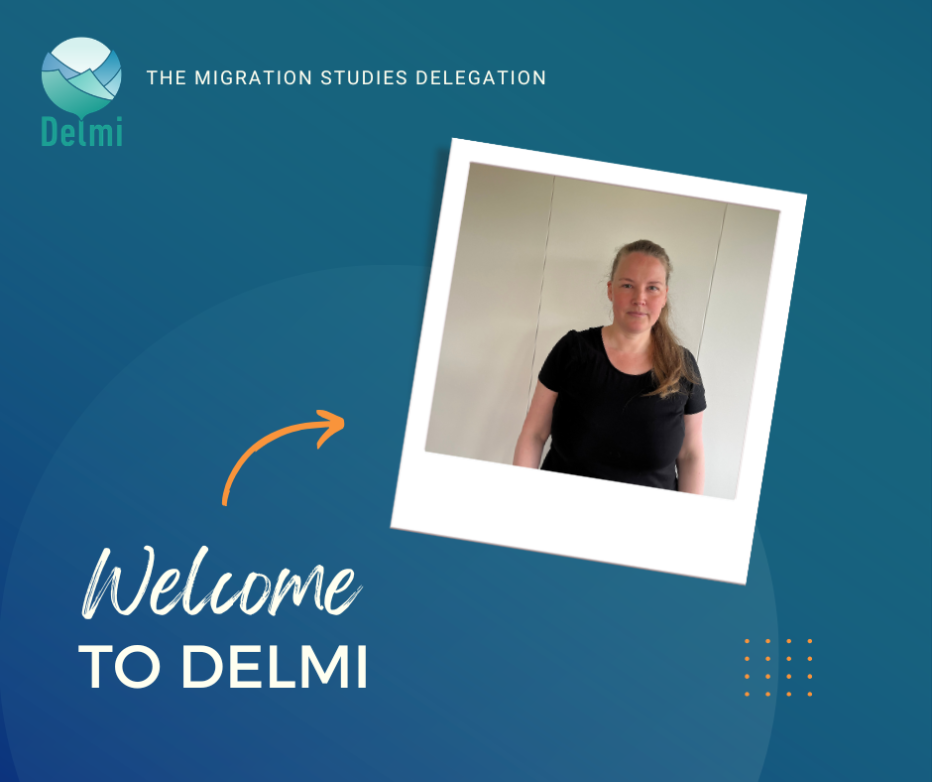
. | New colleague at Delmi! Welcome Sandra, our new Research Coordinator at Delmi! We’re excited to have you on the team and to see all the great things you will contribute with.
Why did you choose to apply to Delmi?
My research background in asylum and migration issues made me interested in becoming part of Delmi, which contributes with important knowledge in these areas. There is currently a series of reforms taking place in the field of migration, and therefore there is a great need for policy-relevant and practice-oriented research. In addition to Delmi’s research mission, Delmi is an important consultative body on matters concerning migration and integration. My hope is that, with my background, I will be able to contribute to these different parts of the organization together with my new colleagues.
What will you be focusing on this year?
My main task is to co-author a report with Måns Fellesson on temporality and mobility in a project where we will interview Ukrainian refugees in Sweden about their experiences of being covered by the Temporary Protection Directive. Another task is to, as a follow-up to my previous research together with Anna Hammarstedt, write a policy brief on children in reception and return centres, as well as in detention. I will also co-write a consultation response with Pinar Aslan Akay to the proposal to introduce interpreter fees and prohibit the use of child interpreters, and serve as one of the academic reviewers for the project on voluntary return migration.
Which area of migration are you particularly interested in?
As my research background is in child and youth studies with a focus on asylum and migration contexts, I am particularly interested in analysing migration policy reforms from a child perspective. My research has also had a strong focus on rights and how migrants’ conditions are shaped by policy, but I am also interested in how different actors carry out their responsibilities in their encounters with migrants, especially in relation to children and families.
| Thank you for following our work! | |