Message from the Head of Secretariat
It has probably not escaped anyone that this is an election year and as we have mentioned in previous newsletters, we at Delmi are working on issues relating to knowledge-building in the field of migration and integration in the context of the election year. We will be highlighting this in various ways throughout the spring and summer, to strengthen the focus on the importance of evidence in the political debate. This is also why we have chosen to attend Almedalen this summer, together with our colleagues at the Expert Group for Aid Analysis. By being on the ground where political discussions are taking place, we aim to give policy‑relevant migration and integration research a visible platform. In doing so, we hope to contribute to fruitful discussions and to the dissemination of knowledge. More information will follow in the spring.
The importance of evidence-based knowledge also ties in with a conclusion frequently highlighted in Delmi’s publications: that more research is needed. Furthermore, it is often noted that research needs to be made more comprehensible and accessible. Today, far more research is being conducted at universities both in Sweden and abroad on issues relating to migration and integration, compared to the situation a few years ago. At the same time, the complexity and fluidity of society mean that knowledge often needs to be developed, deepened, updated and supplemented. We are therefore particularly pleased that further investment is being made in research specifically on migration and integration, through the newly established AMIF-funded Centre for Migration and Integration Research (CMIR) at the Stockholm School of Economics. We at the Delmi Secretariat are in ongoing dialogue with CMIR to exchange information and experiences and are discussing opportunities for further collaboration. It is very exciting that we have gained a ‘sibling’ which, like Delmi, contributes with important knowledge on migration and integration!
| | |
We also have a number of European ‘siblings’ through the European Network of Migration Councils (ENMC). In February, the ENMC held its first in-person meeting in Brussels. The ENMC is a network for institutions in various European countries that conduct policy-oriented research on migration and integration. Some ENMC members also have a more formalised advisory role towards their governments. During the meeting, discussions included further concrete steps to strengthen our cooperation, topics for our digital thematic meetings throughout the year, and opportunities to expand our network to include more countries. In connection with the meeting, a new member was also welcomed to the ENMC, namely the Finnish Migration Institute. At Delmi, we see great value in the exchange with our European colleagues, and there is much we can achieve together.
In this newsletter, you can read about some of the topics we have in the pipeline this year, but there is also much more we are working on. As always, I would therefore like to encourage you to continue following Delmi’s work, particularly via our website and LinkedIn. You are also very welcome to get in touch if you have any questions about our activities. Thank you for your interest!
| Agneta Carlberger Kundoori,
Head of Secretariat
| | | | | Picture:
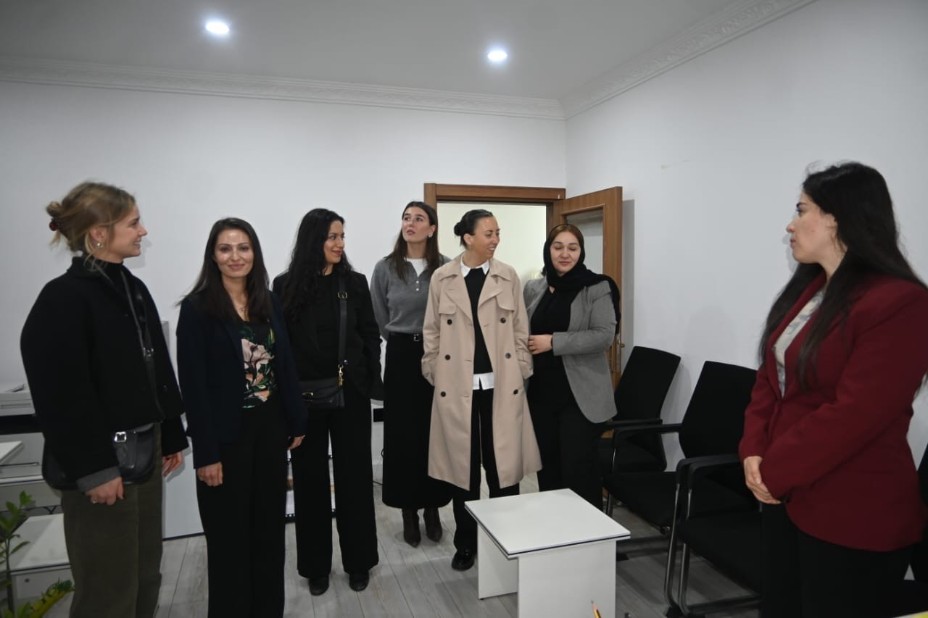
From the project groups meeting at the Migrant Resource Centre in Erbil. Delmi in Iraq: Latest news on the Legal Migration project
On September 1st, 2025, a new AMIF-funded project was launched at Delmi. The project, From Information to Migration: Information Sharing in Third Countries and Its Significance for Legal Migration to Sweden, aims to enhance knowledge about the opportunities and challenges related to information sharing about legal migration in Iraq, Uzbekistan, and Pakistan. Between 26 January and 3 February, parts of the project team travelled to Baghdad in Iraq and Erbil in the Kurdish region of Iraq to carry out the project's second field study and collect both empirical material for the upcoming report and communication material for Delmis’s website. During this project trip, interviews, meetings and communication activities were carried out to gather knowledge about information sharing on legal migration. During the stay, the author group and the communication group in the project met with representatives from, among others, IOM Iraq, the International Centre for Migration Policy Development (ICMPD), Deutsche Gesellschaft für Internationale Zusammenarbeit (GIZ), Rwanga Foundation and the Migrant Resource Centre to gain a deeper understanding of how information on legal migration is disseminated and how the work to promote legal migration is conducted.
| "By conducting communication activities and interviews with these actors, understanding of their experiences, challenges and perspectives increases, which in turn gives the public a clearer picture of how the work with potential migrants works in practice." Diana Berberich, Communications officer. | | | |
The project trip provided valuable insights into local conditions, challenges and opportunities linked to legal migration and constitutes an important basis for Delmi's continued work. The last trip within the project will be carried out in March, then to Uzbekistan, and the report is planned to be launched in the fall of 2026. Read more on Delmi's website:
More interviews will be published soon. Keep an eye on the tab
Legal Migration, for more information and regular updates.
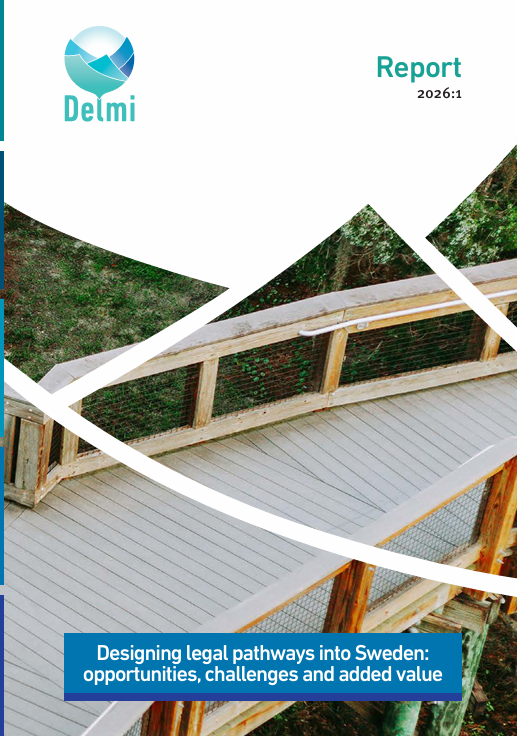
| Report 2026:1 Designing legal pathways into Sweden: opportunities, challenges and added value
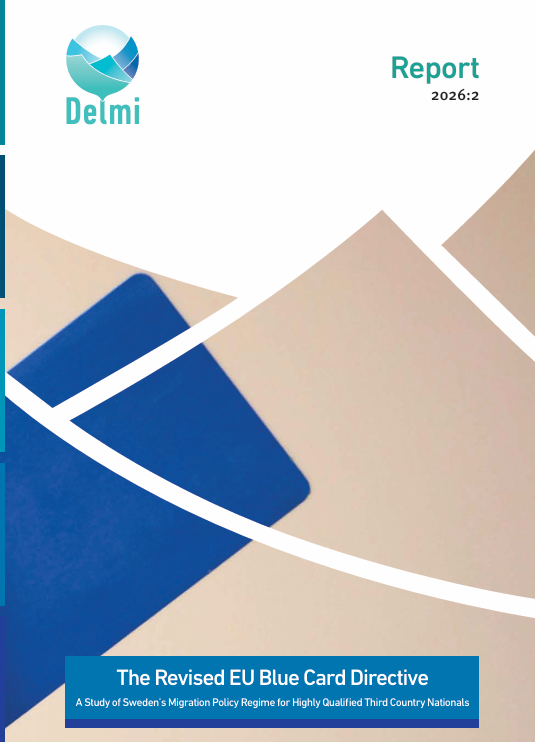
This report examines how Sweden can design and expand legal pathways for migration, particularly for work and study, as well as so-called complementary pathways for people in need of protection. The findings suggest that legal and complementary pathways can help alleviate labour shortages and demographic imbalances in Sweden, while also providing safer alternatives to irregular migration for people seeking protection. The report is authored by Zvezda Vankova, Associate Professor and Senior Researcher at the Faculty of Law, Lund University, and | | | | Report 2026:2 The Revised EU Blue Card Directive
The report traces the development of the revised EU Blue Card Directive and examines how Sweden has implemented the new rules. One year after the reform entered into force, applications for the EU Blue Card have increased. At the same time, most highly skilled workers coming to Sweden continue to apply for the national work permit, and many of those who do apply for an EU Blue Card are already in the country on a national permit.
According to the report, this is mainly due to limited awareness of the revised Blue Card, established employer practices, and several common misconceptions about the advantages the Blue Card offers.
The report is authored by Micheline van Riemsdijk, Professor of Human Geography at the Department
of Human Geography, Uppsala University.
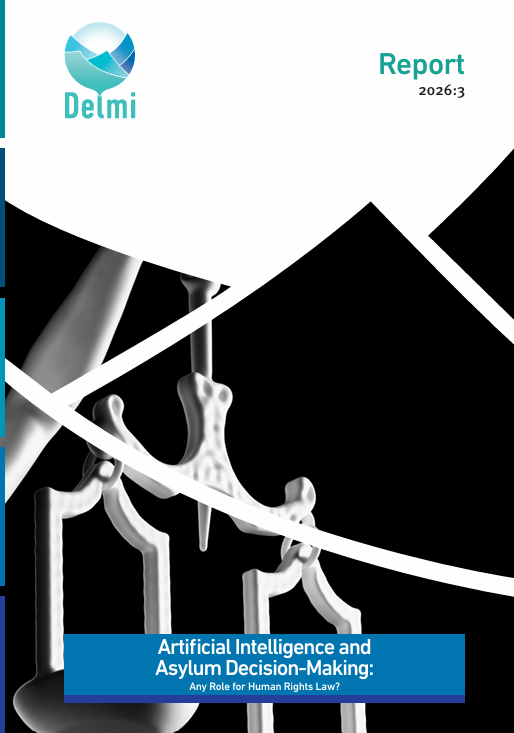
| | | | Report 2026:3 Artificial Intelligence and Asylum Decision-Making
This report examines whether AI-supported decision-making in asylum cases aligns with human rights law, especially the rights to privacy and protection from refoulement. The study clarified the difficulties in establishing causation between this harm and the use of AI systems. However, these difficulties can be overcome if the harm is conceptualised as a procedural harm. This justifies focus on procedural guarantees (i.e. quality of the decision-making process, timeliness, effectiveness, independence, involvement of affected individuals, clarity of the reasoning behind decisions). If an AI system is involved, these guarantees should be complied with, including the involvement of the affected individuals and clarity of the decisions that have affected them. | | | | The Child Rights Perspective in the EU Migration and Asylum Pact
The upcoming policy brief examines how children's rights are addressed in the EU's new migration and asylum pact, adopted in May 2024, which comprises several new legal instruments of direct relevance to children in the asylum process. The reform package includes, inter alia, rules on screening, asylum procedures, reception conditions, and border return procedures—areas in which children are particularly likely to be affected.
This policy brief asks how the child rights perspective, as enshrined in the EU Charter of Fundamental Rights, is reflected in the legal instruments forming part of the EU Migration and Asylum Pact.
Read more here: The Child Rights Perspective in the EU Migration and Asylum Pact - Delmi. | Implementing the EU Pact on Migration and Asylum: Balancing Efficiency, Solidarity, and RightsThe upcoming policy brief analyses the EU’s new Migration and Asylum Pact, adopted in spring 2024 and set to become fully operational in 2026. The Pact constitutes the most far-reaching reform of the Common European Asylum System in several years and aims to reduce irregular migration, harmonise asylum procedures, and strengthen solidarity among Member States.
The policy brief addresses issues such as mandatory solidarity, border and accelerated procedures, crisis and derogation mechanisms, and the EU’s cooperation with third countries.
Read more here: Implementing the EU Pact on Migration and Asylum: Balancing Efficiency, Solidarity, and Rights - Delmi. | Experiences of migration and aidThe upcoming anthology deals with how the government's strategy for development aid linked to migration, return, and voluntary repatriation entails new tasks within development aid work, as well as how other European countries are working to support return and what lessons Sweden can learn from their work.
In the anthology, researchers from the Netherlands, Germany, Denmark, and Norway present analyses of how their respective countries have responded on these challenges and the insights they have gained.
Read more here: Experiences of migration and aid - Delmi. | Who are the case officers at the Swedish Migration Agency, and does it matter?
The upcoming report deals with how decisions are made in the asylum process and the role played by case officers at the Swedish Migration Agency. Previous studies have shown that decisions made by decision-makers can be influenced by legally irrelevant factors such as the time of day, gender, or experience. It is therefore not unreasonable to expect that the outcome of an asylum process might be affected by who the case officers are and by their characteristics.
Read more here: Who are the case officers at the Swedish Migration Agency, and does it matter? - Delmi. | Asylum assessment of asylum seekers who cite sexual orientation and gender identity as grounds for asylum
This ongoing project examines the asylum assessment of individuals who invoke sexual orientation and gender identity (LGBTQI) as grounds for asylum in Sweden. Asylum claims related to sexual orientation or gender identity constitute a distinct category, as they are based on internal processes rather than external events. In the assessment of such claims, not only is the credibility of a person’s actions evaluated, but also their sexual orientation and identity. The investigations may therefore be experienced as intrusive and traumatizing for asylum seekers.
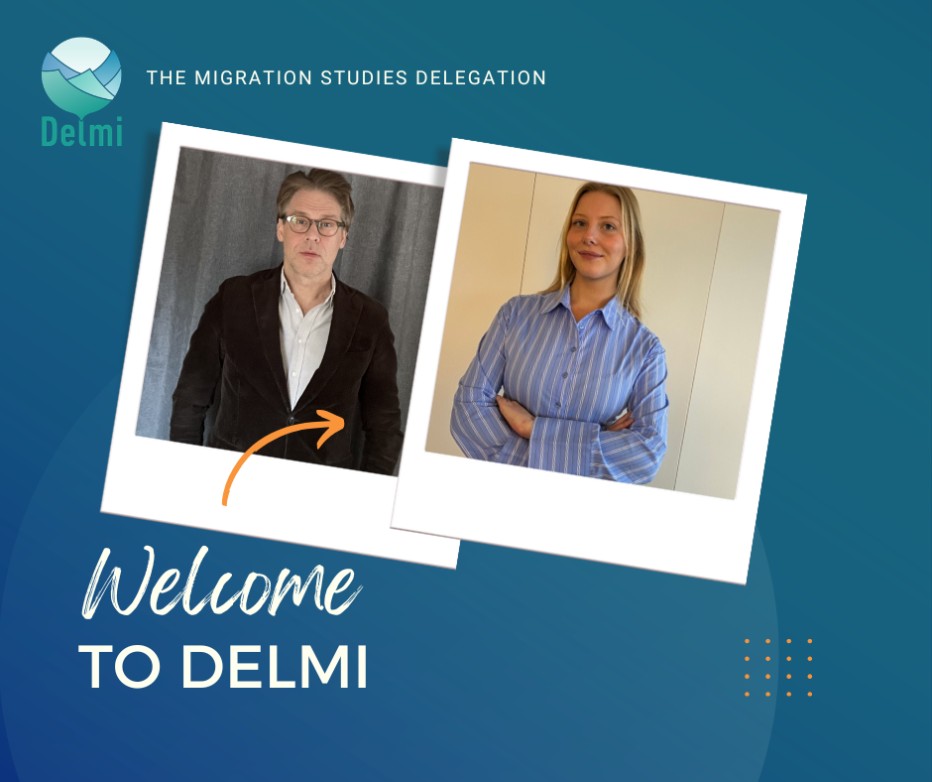
Read more here: Asylum assessment of asylum seekers who cite sexual orientation and gender identity as grounds for asylum - Delmi. | New colleagues at Delmi! Welcome Måns, our new Research Coordinator at Delmi, and Miranda, our intern during the spring! We’re excited to have you on the team and to see all the great things you will contribute with.
Why did you choose to apply to Delmi?
Måns: If you are interested in migration-related issues, knowledge development, and policy, it is hard to overlook Delmi. I have worked extensively with migration issues and policy development, both as a researcher and as a civil servant at the Ministry of Foreign Affairs and at the UN. For me, Delmi represents the perfect combination of these interests. I have been following Delmi's work for a long time and have always found that they address important questions and produce high-quality studies. These are transformative times in both migration policy and aid. To effectively navigate policy development, it must be informed by research and analysis. Delmi's work is central to this process. I hope that my expertise in the field can contribute to these efforts. Miranda: I applied for an internship at Delmi since I am very interested in questions related to migration and integration, a field that has also been central to my academic career. My bachelor’s thesis at Erasmus University focused on labour market integration of migrant women in Sweden and my master’s thesis at Uppsala University examined media representations of privileged migrants, commonly referred to as expats. An internship at Delmi felt like a logical next step, since it allows me to transform my theoretical knowledge into practical experience, while I simultaneously deepen my knowledge on how empirical findings may influence important societal issues and migration-related policy decisions. Besides this, I think Delmi’s work is particularly important today, as there is a lot of misinformation concerning migration. What will you be focusing on this spring?
Måns: My primary focus will be the development of a new project centred on economic mobility and connectivity among refugees with temporary residence permits in Sweden. Initially focusing on refugees from Ukraine, the study seeks to understand how individuals with temporary status economically navigate and orient themselves across different geographies—in Sweden, in their country of origin, and potentially in a third country. What do these movements look like, and what are the socio-economic consequences of refugees having to operate on multiple arenas simultaneously? Miranda: I am looking forward to taking part in Delmi’s daily operations and develop an understanding of the processes behind Delmis’s dissemination of research-based knowledge on migration and integration. Additionally, I want to deepen my knowledge of policy relevant questions related to migration that Delmi is actively working on, such as legal pathways, return processes and migration and development aid. Which area of migration are you particularly interested in?
Måns: My primary research interest lies in political attempts to address protracted refugee situations. This issue is equally relevant in a Swedish context, and I hope to further develop this line of research in upcoming projects at Delmi. I am also interested in the intersection of migration and development aid, specifically the opportunities and challenges inherent in this relationship. Another key area of my work concerns mobility and knowledge development; I examine academic mobility as a component of global research production and as a resource for meeting high-skilled societal needs. Furthermore, more attention should be given to remittances—their underlying conditions and development impacts—particularly now, as official development assistance is being reduced and alternative financial flows are becoming increasingly vital.
Miranda: I am
interested in a variety of areas of migration, but particularly integration,
labour market migration/integration, political attitudes toward migration,
socio-economic disparities between different migrant groups. | Watch Delmi’s film on return migration – three years of project work summarised in five minutes!On 1 February 2023, Delmi launched the project Return Migration as International Migration Policy: Coordination Within and Across National Borders. The focus was on how diplomatic tools and international (and national) cooperation can promote an effective and sustainable return process carried out in humane ways. All sub‑projects are now completed and all studies have been published.
Read more about the project under the Return Migration tab on Delmi’s website.
| Integrating Migration in Development Aid – Lessons from EuropeSeveral other European countries have already moved further in linking migration with development cooperation. What lessons can Sweden draw from their choices? The seminar was arranged in cooperation with The Expert Group for Aid Studies. Guests: - Henrik Malm Lindberg, Deputy Head of Secretariat at Delmi
- Johan Schaar, Associate Senior Fellow at SIPRI
- Jesper Bjarnesen, Senior researcher at The Nordic Africa Institute
- Jessica Schultz, Senior Reseacher, Christian Michelsen Institute
-
Moderator: Mats Hårsmar, Deputy Head of Secretariat at The Expert Group for Aid Studies
| Thank you for following our work! | |